


I love that Canadians are polite.
When Geoffrey Hinton won the Nobel Prize in 2024 for inventing the brain of AI, he used half his speech to warn everyone not to screw it up. The guy built the thing that runs the modern world and mostly seemed worried we’d set it on fire.
That’s so Canadian, it’s beautiful. Frankly, it’s our super power. It’s what makes people trust us and want to do business with us, again, and again.
Though sometimes, we forget you can be polite and relentless at the same time.
We have titans in our backyard. Geotab in Oakville tracks over 5 million vehicles worldwide. PointClickCare in Mississauga runs the health network for over 30,000 organizations. These are empires. And most of us couldn’t name them at gunpoint.
We whisper about our wins like we’re embarrassed they happened. Somewhere along the way, being polite turned into being sorry. Sorry for our success, sorry for taking up space, sorry for building empires that actually matter.
2025 felt different: Tax incentives that actually reward builders who ship, Waabi putting self-driving trucks on real highways, Cohere building arguably the most secure AI on earth. The momentum stopped whispering and started yelling.
I started Not Sorry to make Canada impossible to ignore.
This is home for the builders who stayed, the ones who left but still check the score, and anyone tired of betting against us.
2025 was the year we got loud. 2026 is the year we stop being sorry about it.
1. The Spreadsheet That Rewrote the North
There’s a guy named Bruce (there’s always a Bruce). He runs a manufacturing company. He’s sitting in a boardroom on the 15th floor of Brookfield Place, staring at a spreadsheet that’s about to decide where he builds his next factory.
For ten years, that spreadsheet pointed south. The U.S. had better tax math. But that had changed:
The Success Tax (METR): This is the “Friction Tax” on investment. In 2024, Canada was at 15.6%. In 2025, the Productivity Super-Deduction slashed our rate to 13.2%. We are now the lowest in the G7.
The “Time Tax” (Day 1 Write-Offs): Before 2025, if Bruce bought a $100M building full of robots, he had to write it off over 20 years. In November 2025, the rule changed: Write it off on Day 1.
Bruce ran the numbers again. Hamilton, Ontario won. Bruce is building here because the math finally makes sense. We stopped being modest about wanting to win and built a tax structure that makes Canada the obvious choice.
2. Speed Became Strategy
Canada decided to move fast.
On December 18, 2025, Canada and Ontario signed a deal: one project, one review, one decision. We backed it with $213.8 million for a Major Projects Office (MPO) led by former Trans Mountain CEO Dawn Farrell. Her job is to get nation-building projects approved in 24 months, not 20 years.
The office named the targets: $116 billion in projects like the Ring of Fire mining roads and LNG Canada Phase 2. Because every year we wait is a year someone else builds it first.
3. The Money Rules We Rewrote
If you’ve ever tried to build fintech in Canada, you know the problem: innovation required permission slips from people who already owned the playground.
In 2025, the infrastructure finally caught up:
The Stablecoin Act: This took digital money out of the shadows. The Bank of Canada set the bar: if your stablecoin isn’t 1:1 backed by high-quality liquid assets, it isn’t money.
Open Banking: With the Consumer-Driven Banking framework, if a customer wants to share their financial data with your app, the bank has to let them. No more gatekeeping.
For builders, if you follow the regulations, you can build. You don’t need a bank to say yes first. We’re not sorry for getting serious about fintech. The world is watching, and Canada made its move.
4. Compute as Infrastructure
Our AI minds are among the best in the world, but we’ve been renting the “factories” from U.S. cloud providers. In 2025, we stopped renting. We treated compute like a highway or a power grid: publicly funded, Canadian-owned, and sovereign.
The $2.9 Billion Stack: After the November 2025 Fall Statement added a fresh $925.6M investment, our Sovereign AI Compute Strategy is now a $2.9B powerhouse.
The SCIP is Live: The Sovereign Compute Infrastructure Program (SCIP) has moved past “planning.” Construction on the national supercomputing backbone is officially underway to ensure the world’s largest AI models are trained on Canadian soil.
The Access Fund: As of this fall, the $300M AI Compute Access Fund is fully operational. Canadian startups no longer have to beg for credits from AWS in Virginia. They are scaling on subsidized, high-performance Canadian capacity right now.
Canadian AI scales here now. We are officially done being the farm team.
5. Minerals Became Strategy
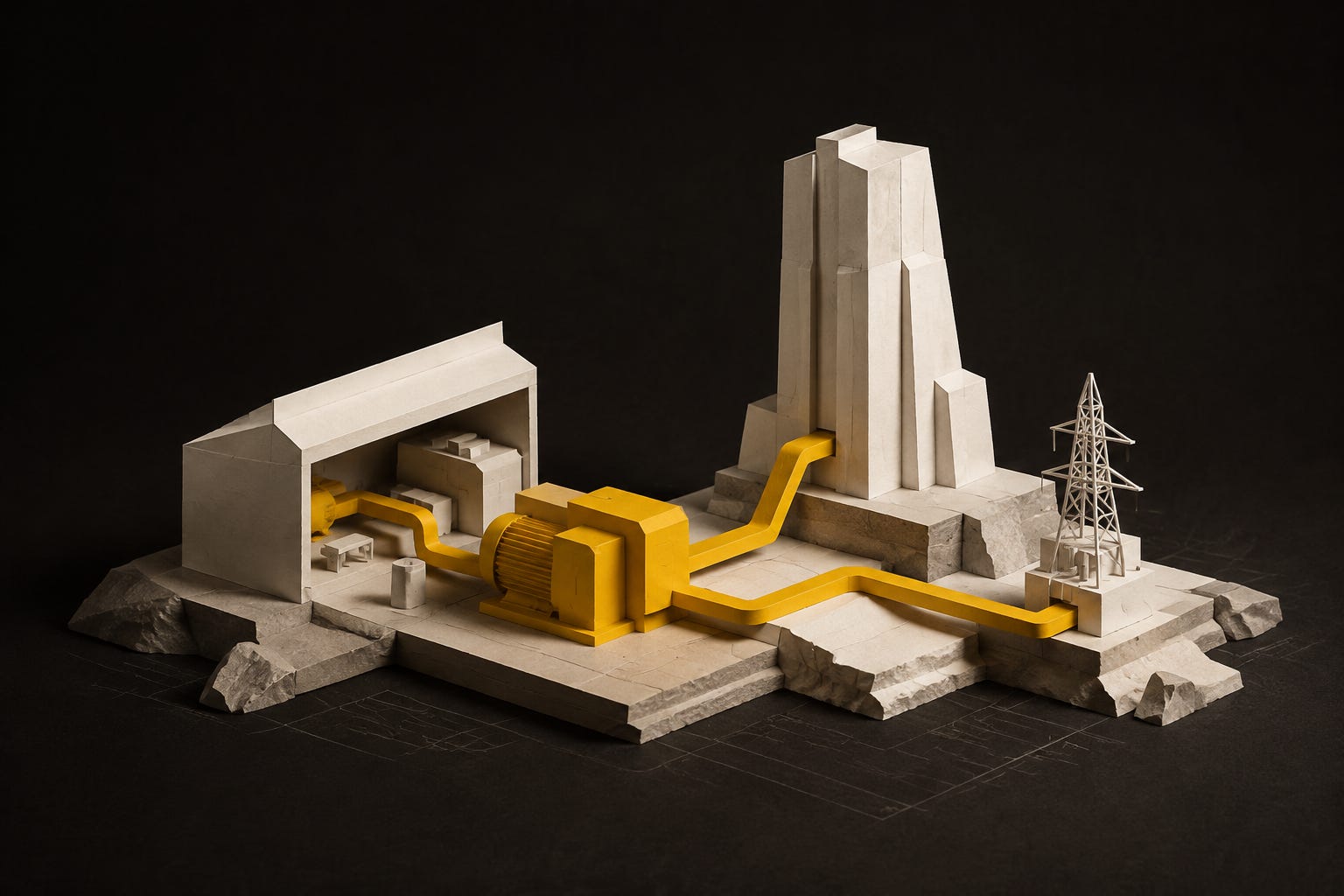
We stopped just mining the Canadian Shield and started owning it. Stockpiling minerals. Financing projects. Controlling supply chains our allies actually need. We’re not sorry for going big on critical minerals. We’re owning what we’ve got.
As an aside, the Shield is a massive 8-million-square-kilometre storehouse of ancient rock that forms the core of North America. It is one of the world’s richest areas for mineral ores, containing vast deposits of nickel, gold, copper, and the specialized materials that power the modern world.
We launched the Critical Minerals Production Alliance to fast-track $6.4B in projects. But the real “Not Sorry” move was the $2B Sovereign Fund. It can do what a government department can’t: equity investments and offtake agreements. We activated the Defence Production Act to stockpile these minerals, signaling to our allies that if you want a secure supply chain, you come to the North.
So…Let’s Go!
That was just the start. There’s more:
The Energy Moat: Clean Electricity Credits are forging an unbeatable grid that makes our industrial power the cheapest and cleanest in the G7.
The R&D Turbocharger: SR&ED was doubled to $6M meaning your research spend is now backstopped by a 35% refundable credit.
The Deep Tech Anchor: A $334M Quantum-AI defense push to ensure our most sensitive breakthroughs stay on Canadian soil.
The New Industrial Heartland: Alberta carbon hubs are pulling CO2 from the sky, while Ontario and Quebec battery giants (like the 90GWh PowerCo plant) are gearing up to power North America’s electric century.
Spreadsheets don’t lie (well, the ones I’m talking about). The builders who left for Palo Alto and New York a decade ago are staring at the numbers and seeing the same thing:
Canada is not playing around.
And look, we haven’t solved everything. Housing is still broken. The productivity gap is real. We’re still losing homegrown companies to foreign buyers. But something shifted in 2025, and for the first time in a long time, it feels like we’re playing to win.
Hinton proved you can invent the future from a porch in Toronto and still care enough to warn the world not to burn it down. He proved you can be the undisputed best on earth and stay a decent human being.
That is the “Polite” part. It’s our soul. It’s non-negotiable.
But for too long, we used that decency as an excuse to stay small. We treated our genius like a secret.
Not anymore.
We’re adding the “Relentless” part now. The part where we stop whispering about our wins and start building the empires our geniuses made possible. The part where we realize you can hold the door open for someone and still take their market share.
2025 was the year we got loud about what we’re building.
2026 is the year we stop being sorry for winning.
Let’s go!
Subscribe for free essays and reported stories on business, ambition and Canada’s future.
If a piece isn’t useful, tell me. It’ll help me make the next one better.
Couldn’t help but read “sorry” in a Canadian accent
Robust first piece, Bryan! Keep’em coming!