


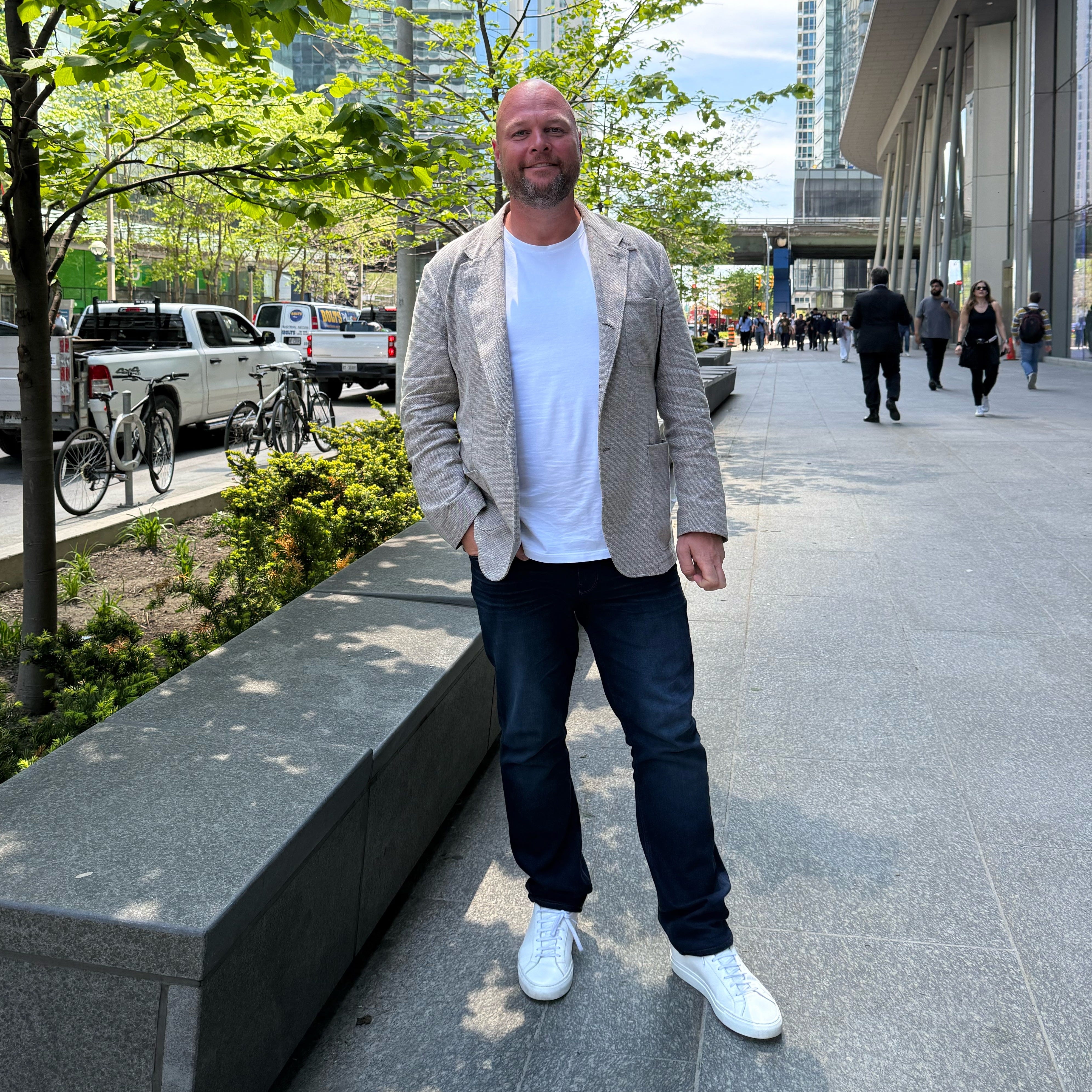
“Every single day, Clio is the largest company I’ve ever run.”
— Jack Newton
Deep into his run with the water to his right and the city at his back, Jack Newton decided to spend a billion dollars.
For fifteen years, nothing had been allowed to interrupt Jack’s daily run, his Shultz hour for letting his mind wander. On this day, in late June 2025, his mind kept returning to one bet.
Seventeen years earlier, he and his best friend had started Clio to help lawyers run the business side of a practice: signing up clients, tracking their hours, sending bills and getting paid. By 2025, hundreds of thousands of legal professionals used Clio.
What Clio had never owned was the law itself (the court decisions and statutes a lawyer reads before writing a word). For decades, American lawyers had searched those mostly on Westlaw and LexisNexis, and neither was for sale.
Meanwhile, in Barcelona, two brothers had spent twenty-five years building their own case law database. It was a billion documents deep, and it had just come up for sale.
Investors had valued all of Clio at three billion dollars the summer before. Jack was about to offer a third of that value for the Barcelona-based company. He had days rather than months, and he wasn’t the only bidder.
Jack knew it would either be the best decision of his career or the most expensive mistake.

Two Hammers Looking for a Nail
Jack was eight when the Newtons packed up in Toronto and moved to Edmonton, where his father had been hired to build a new electronics test centre for the Alberta Research Council. Edmonton winters could hit minus forty, the one temperature Celsius and Fahrenheit agree on.
“On one hand an exciting move,” Jack told me, “but also, you know, pretty devastating.” His grandparents, aunts, uncles, cousins and every friend he had stayed behind, and with nobody else to lean on, the family pulled tighter.
In grade three, on a playground at Rio Terrace Elementary School, he met Rian Gauvreau. The two boys spent the next decade trying to turn almost anything into money. They shovelled driveways, which in Edmonton was “a very lucrative line of business,” Jack said, and they built computers for friends and family, then websites. Jack wanted to be a fighter pilot, so naturally the two of them dreamed up Newton Gauvreau Aerospace. “We even had a logo for it,” Jack said, “but we gave up that idea when we realized the startup costs were significant.”
After high school, Rian left for Simon Fraser University in Vancouver to study kinesiology, and Jack stayed home to study computer science at the University of Alberta, where the goal for every kid in his class, he said, was to “go and get a job with a Microsoft or an IBM.” Starting a company “just wasn’t in the realm of possibility.”
Jack went to work as the first software developer at Chenomx, a four-person University of Alberta spin-off that made software to identify the compounds in blood, urine and other body fluids. He went through its first million-dollar raise and its hunt for customers, and he “really kind of fell in love with being in a startup.” The job sent him to Silicon Valley for the first time. “For an Edmonton kid, kind of a prairie boy that had never experienced that,” he said, “that was really eye opening.”
Along the way, he went back to school for a master’s degree in machine learning, long before anyone outside a computer science department cared about it, and around 2003 Geoffrey Hinton offered him a place in his lab at the University of Toronto to do a PhD. Hinton had spent decades on neural networks that much of his field had written off, work that would win him a Nobel Prize in 2024 (yes, the same kind of neural networks ChatGPT runs on). Jack came within “a hair’s breadth” of going. “This was before Google or Facebook or Amazon, or obviously OpenAI or Anthropic, started hiring armies of machine learning PhDs,” he said, “so the market for ML PhDs at that time was really just academia.” Jack wanted to build things, so he said no.
A University of Toronto student named Ilya Sutskever made the opposite call. He knocked on Hinton’s office door one day and told Hinton he’d been cooking fries over the summer but would rather be working in the lab. Sutskever later co-founded OpenAI. In 2017, asked to name the toughest decision of his career, Jack picked turning down Hinton. Asked in the same interview which profession he’d most like to try, he answered machine learning research.
While he was at Chenomx, Jack read Paul Graham’s Hackers & Painters, essays by a programmer who had sold his startup to Yahoo, and one idea stuck. “As a software developer, as an engineer, you can build anything,” Jack said, “and you can build a company around whatever you build as well.” He stayed at Chenomx four or five years, rising to director of product development, until he “got that itch again.”
By 2007, Jack and Rian had pitched each other everything from bicycle lockers for Vancouver to a kind of Amazon.com for getting preserved goods to northern communities in Alberta, and they were, Jack said, “two hammers looking for a nail.”
Cousin John
Rian was running IT for the Vancouver office of Gowlings, one of Canada’s largest law firms, and working on an MBA at the University of British Columbia on the side. Jack was sure that software rented by the month and used through a web browser, the way Salesforce and a small Chicago company called 37signals sold it, would change every industry.
“Hey, I think this cloud thing is going to be huge,” Jack remembers telling Rian. “We should figure out an application domain to bring it to.”
“Well, look, I might be biased because this is right in my backyard,” Rian said, “but the tools and the software that the lawyers at Gowlings need to use are awful. Everyone hates them, they’re hard to use, they’re often at best lipstick on a relational database.” That’s programmer talk for a fresh coat of paint on what is, more or less, a giant spreadsheet. “I think we could do a lot better,” he said.
Neither of them was a lawyer. Jack’s picture of the profession came from TV, “a Harvey Specter on Suits kind of thing,” he said, “or, you know, at the time, Ally McBeal,” all fancy downtown offices and firms of five hundred or a thousand people. Then he and Rian had lunch with a friend who was director of practice standards at the Law Society of British Columbia, the body that licenses and disciplines the province’s lawyers. Most of the lawyers he had to discipline, the friend said, worked alone or in tiny firms. At a big firm, a lawyer had paralegals and assistants all around, and “if they drop a ball, one of those support staff can catch that ball for them before it hits the ground.” A lawyer working alone had nobody to catch it.
About half of American lawyers in private practice worked alone, and roughly seven in ten worked in firms of ten lawyers or fewer, practising law and running a small business at the same time. The lawyer who drew up a family’s will or handled the paperwork on a house was often one of them. “You don’t have a floor of IT people like Gowlings does,” Jack said. “You’ve probably got, you know, Cousin John, that can help you out setting up your server and your software.” Their software would need neither a server nor a cousin.
The two of them wrote the first version at night and on weekends, Jack in Edmonton and Rian in Vancouver, and incorporated as Themis Solutions, after the Greek goddess of law and order. They named the software Clio, after the muse of history, and priced it at $49 a month per user. In 2008, with early signs from the prototype that they were onto something, they raised about $100,000 from friends and family, and Jack told everyone to treat it as if they were lighting the money on fire. “I did not want to be coming to a Thanksgiving dinner down the road where my mom and dad are eating macaroni and cheese for dinner,” he said, “because they lost their nest egg on Clio.”
The founders of 37signals thought VC stood for vulture capital, and Jack and Rian “really kind of bought into that line of thinking,” Jack said. The plan was a business that “throws off like a couple hundred grand a year,” serving maybe a few hundred lawyers, with a few people to help support them. “That’ll be a win,” Jack said. “That’s all we wanted to build.”
The plan lasted about a year.
The Badge
The founders hoped to start by selling Clio to lawyers in British Columbia, where, Jack said, they were “laughed out of the room.” So they took what he called a “YOLO bet” on the United States, and in March 2008 they flew to Chicago with a booth for ABA TECHSHOW, the American Bar Association’s technology show.
“I didn’t know anybody in the space,” Jack said. He asked someone he trusted whom he should get to know and came away with two names: Bob Ambrogi, a lawyer who wrote about legal technology, and Kevin O’Keefe, whose company built blogs for law firms. Jack emailed them both, and both agreed to meet him for a beer. O’Keefe’s standard warning to software founders who turned up at legal conferences with a suitcase was “nobody knows you, there’s no trust.” “We didn’t know who Clio was, per se, but we knew Jack Newton,” O’Keefe said. “He bought me a beer, seems like a nice guy. And that was about it.”
On the show floor, a man stopped at their booth and started asking questions. Did Clio do document management? Did it do billing? How big was the team? Had they raised venture capital? It struck Jack as “a very unusual line of questioning,” so he and Rian asked whether the man was a lawyer.
The man flipped his name badge over. “Oh, I’m with Rocket Matter,” he said. “I’m with the competition.”
“Rian and I were like, who’s Rocket Matter?” Jack said. When the show wrapped, they packed up the booth, went up to their hotel room and Googled it. Rocket Matter was a Florida company with basically the same idea, and it had announced its test version a little over a week before Clio. “Our hearts sank,” Jack said. “If you have a great idea that has no competition,” he said later, “it’s either a horrible idea or you’re about to become very successful.”
At that first TECHSHOW, O’Keefe put the founders in front of his video camera, and afterward Jack told him the video had brought in more leads than the booth. Jack kept hauling that booth anyway, a card table and what he called a “100-pound display booth,” through airports all over the United States for years, and once nearly drove into a tornado between Arkansas and Missouri. For his first eight years in legal technology, he said, “me having anything more than a t-shirt on is dressing up.”
In June, Ambrogi wrote the first blog post ever about Clio. “I have not yet tried it,” he added. A decade later, Jack still held the post up at the occasional company town hall. “This is where Clio was born to the world,” he told his employees.
Catherine Merino Reisman heard about Clio from Ambrogi’s post. She and her law partner had left a larger Philadelphia firm to start a practice in Haddonfield, New Jersey, for people with disabilities and their families, and keeping overhead low was how they kept their rates affordable. She signed up to test Clio while it was still free, and whenever something broke she called Jack and Rian. “I feel like I helped to build it,” she said, “in the sense that if I had an idea, or if something wasn’t working, I would tell them what it was that I wanted to be different. And if they could do it, they did it.” Clio later named its customer awards, the Reismans, after her.
When the founders learned she was running her practice on Clio, they both quit their jobs.
The Spam Folder
A hundred thousand dollars wasn’t going to be enough. The founders figured they needed about a million to hire salespeople and market Clio, and in 2008 they pitched every investor they could find in Western Canada and the United States just as the global financial system looked ready to collapse. The answer was always some version of “This is a great pitch, love the idea, would love to put some money in, but we’re just not writing cheques right now.” Walking through an airport, Jack saw a cover of The Economist showing the logos of the world’s big banks going down a drain and thought, “I could not have picked a worse time to start a company.”
One angel investor stayed at the table. Right before the round was due to close, he came back wanting to rewrite his offer so that the founders would give up twice as much of the company, along with “a number of very significant control provisions.” Without his money, Clio couldn’t make payroll, and Jack had a mortgage and his first child on the way. Taking the deal would have kept the lights on and handed one investor a large say over everything that came after. “We had to make the difficult decision to say no,” Jack said, “which was almost worse than hearing no.”
Jack took out a second mortgage on his house, and the founders kept Clio alive on money from his parents, a maxed-out credit card and what Jack called “every form of debt we could get to.” They drove down to Seattle for cheaper flights to American cities, and after one trade show they returned a Mac to the Apple Store, which made it, in effect, a free rental.
Meanwhile, in Germany, Christoph Janz was wondering why the founders wouldn’t answer his email.
A friend of Jack’s in Edmonton had asked to profile Clio on his tech blog. “I’m not sure how many people read this blog, but it can’t hurt,” Jack thought at the time. “If it’s a backlink for Google, like, all the better.” One of the readers was Janz, who had just sold his company and made his first angel investment in Zendesk, a customer-service software company, back “when it was like four guys in a bar in Copenhagen,” Jack said. Private equity firms would buy Zendesk for US$10.2 billion in 2022. Janz read small blogs on purpose, because by the time a startup showed up on TechCrunch it was too late. Clio “reminded me of Zendesk,” Janz said, and he wrote to the founders about investing.
The email came from a German web.de address and talked about money, which, Jack said, “set off all the Google spam alarms about, you know, this looking a lot like a Nigerian prince email scam.” It went straight to spam. Two weeks later, Janz followed up, and as Jack tells it, the note said, “Hey, I’m sure you guys are getting a lot of inbound investor interest. I just want to let you know that I’m really interested.” That one went to spam too.
“Of course, we were not getting a lot of inbound investor interest,” Jack said. “We were desperate to get any investor attention.”
Then one day, Rian was stuck on a call, “just bored out of his mind,” and decided, for what Jack thinks was the first time ever, to look in his spam folder. “I don’t think he’s ever done it since,” Jack said. Rian forwarded both emails to Jack and said, “This actually looks legit. What do you think?” Jack looked Janz up, and he was real. Without meaning to, the founders had played hard to get, and Janz “was even more interested because of the delay,” Jack said.
Over the months that followed, Janz went through Clio’s books and pushed the founders to stop thinking small. “You might be able to build this nice little lifestyle business in a corner of the market to start,” Jack remembers him saying, but if the market took off, a competitor with venture money would come for that corner, “and you might be left with nothing.” Why not be that competitor? He also taught them the odd arithmetic of software sold by subscription. Say it cost $1,000 to win a customer who would pay $12,000 over ten years. Clio would spend the $1,000 on the first day and earn it back a month at a time. “Paradoxically in a SaaS business,” Jack said, using the industry’s name for subscription software, “the faster you’re growing, the faster you’re burning cash.”
The talks ended in Berlin. Tonia, Jack’s wife, was eight months pregnant, so he and Rian “did like a 24-hour trip to Berlin and got back on a plane later the same day,” Jack said, “to make sure I hopefully didn’t miss the birth of my first child.” They came home with a round of roughly a million dollars, led by Janz.
By the end of 2008, the lifestyle business was dead. “The probability of going to zero is probably higher, but the probability of building something really big and meaningful is also a lot higher,” Jack said. “We’re young, this is our first startup. If it doesn’t work out, we could try something else. Let’s swing for the fences.”
Two Pull-Up Banners
Lawyers had questions, to put it mildly. Where would their clients’ files be kept? Who could see them? What would happen to them if Clio went under?
In 2009, a Clio customer asked the North Carolina State Bar whether a system like Clio was even ethical to use. One of the bar’s draft answers worried the industry enough that a group of cloud software companies warned it would “force many cloud computing providers to withdraw from the NC market entirely.” The group’s acting president was Jack, and one of its members was Rocket Matter.
Clio also went to the bar associations, the professional groups lawyers join, and offered their members a discount. By May 2012, more than 17 bar associations were offering Clio as a member benefit, so a lawyer wondering whether the cloud was safe could hear about Clio from her own bar association instead of from a salesperson. Lawyers refer clients to one another constantly, and they passed Clio around the same way. Years later, when Clio ran the numbers on what drove its growth, word of mouth still came in “number one with a bullet,” Jack said.
By 2011, Jack had moved to Vancouver, and the founders knew, he said, whom to hire and which ways of finding customers were worth the money. Jack went for coffee at a Caffè Artigiano on Georgia Street with Boris Wertz, a Vancouver investor who had helped run the online bookseller AbeBooks before Amazon bought it. Jack thought of Wertz as an angel investor and figured Clio was past that stage, so he asked for introductions to venture capitalists in the Bay Area. “Maybe it’s just a good instance of, you know, the saying,” Jack told me. “If you want money, ask for advice, and if you want advice, ask for money.”
“Well, look, you may not know this,” Wertz said, “but I’m also a board partner for Acton Capital.”
In January 2012, Acton, a Munich firm, led a $6 million round in Clio. That round was the moment, Jack said, that Clio started “pouring gas in the fire.”
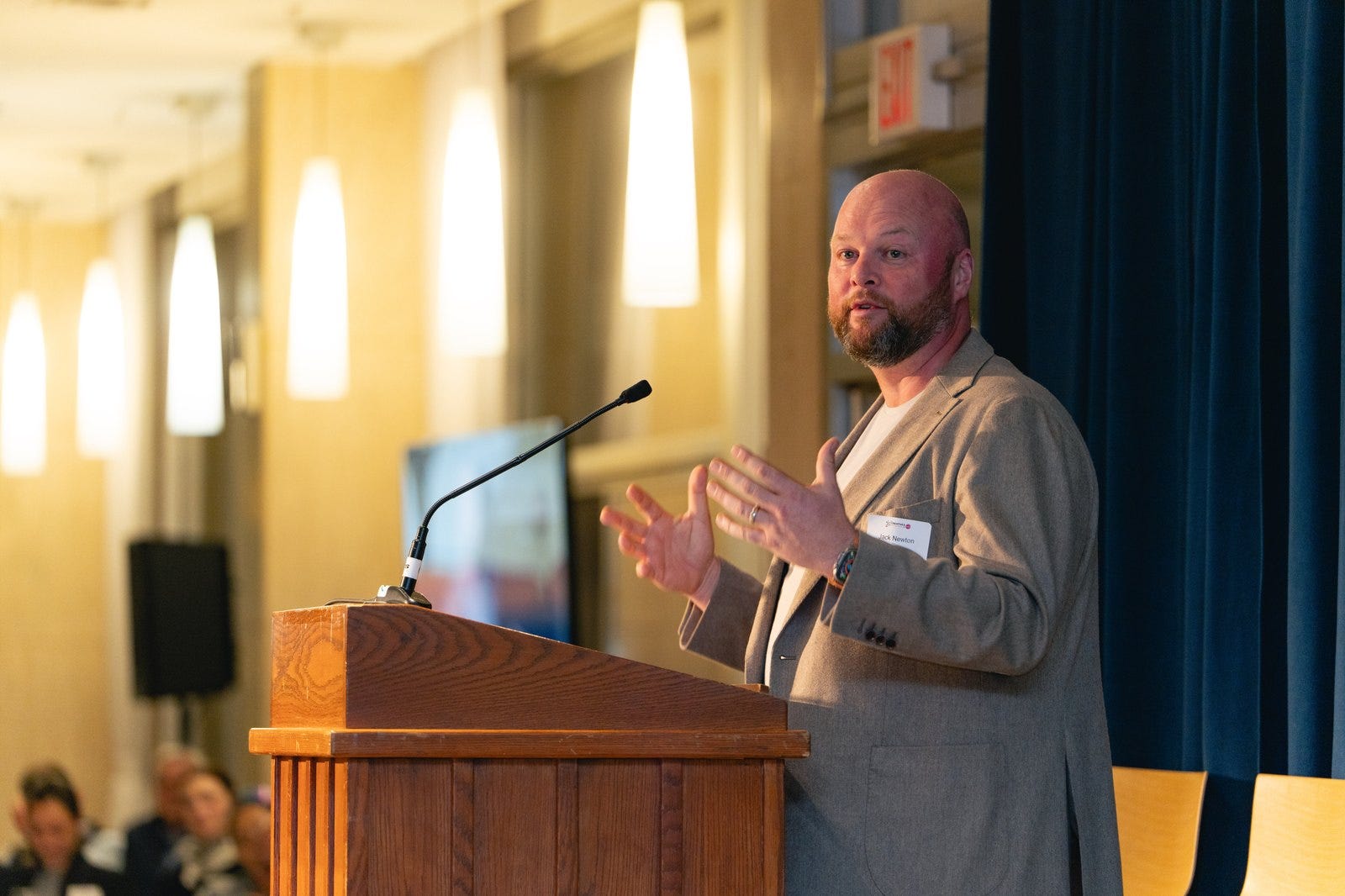
In 2013, Jack decided Clio should hold a conference of its own. “Some of my own team, my wife, many people in my sphere thought I was insane,” he said. About 250 people came to the Hotel Sax in Chicago. “I didn’t even stand on a stage,” Jack said. “I was standing at the front of a pretty boring conference room in a hotel with two pull-up banners to my side.” (He was a founder, after all.) A solo lawyer and blogger named Carolyn Elefant praised the “attractive venue (with working wifi!).” One of the other keynote speakers was Ed Walters, whose company, Fastcase, sold searchable case law to lawyers for much less than Westlaw or LexisNexis charged. Walters and Jack became good friends, and in 2014 their companies linked their software.
Bay Area investors liked Clio, with one condition. “Hey, love the company,” they’d say, “but would you guys relocate to the Bay Area?” Jack and Rian believed they could build a great global company from Canada, and they turned those offers down, “even though that was a hard thing to do at the time,” Jack said. In March 2014, Bessemer Venture Partners, which had backed Shopify and knew its way around Canada, led a $20 million investment and became, by Jack’s account, Clio’s first American investor. Clio stayed put.
Jack assumed he could lure senior executives from the Bay Area to Vancouver by matching their pay. “This is just about money,” he thought. Money turned out to be “maybe like priority number four or five” for an executive with kids in school, and anyone who moved and had a great run at Clio would eventually have to ask, “Who’s the next Clio to work for?” There wasn’t one. When the founders couldn’t find the people they needed in Vancouver, they hired in Toronto.

I Know
Somewhere between 100 and 200 employees, Clio outgrew its founders’ ability to know everyone. One day, Jack and Rian ran into a new salesman their vice president of sales had hired and looked at each other. “Did we really hire that person?” Jack remembers them asking. Neither of them had interviewed him. From then on, one of the two founders interviewed every new hire, and Clio wrote its values down.
For a stretch, though, every major decision at Clio still passed through Jack. “I was the final word on all of it, and it felt good,” he said years later in a TEDx talk. “That’s the part that’s hard to admit.” He had become “less like a CEO and more like an air traffic controller,” with capable people waiting on him for decisions they could have made themselves, and Clio’s success hid the problem. “If you’re a pathological optimist, something I’m often called, and I’m still not entirely sure it’s a compliment,” he said, “you can run on that insulation for years.”
Around 2016, Jack stood inside Antoni Gaudí’s Sagrada Família in Barcelona with his family. The basilica had been under construction since 1882, and Gaudí, asked why it was taking so long, is said to have answered, “My client is not in a hurry.” He had been dead for ninety years, and builders who never met him were still carrying out his design, because he had planned it that way. Jack realized he had built a company that needed him at the centre of it.
Jack walked out of the church and called Rian. He told him, “I think I’ve been getting in our own way.”
Rian paused. “I know,” he said.
Rian knew, other people around them knew, Jack said, “but no one tells the founder that. Not when things are going well.”

The Missing Six Hours
By 2016, Clio had 150,000 active users, and it could see, stripped of names, how tens of thousands of lawyers actually spent their days. At that year’s conference in Chicago, Jack gave the crowd the number. “On average, you get 1.4 hours of paid time per eight-hour workday,” he said. “Our mission at Clio is to find those missing six hours for you.”
A lot of the lost time went to the business around the law, signing up clients and chasing bills. At the next year’s conference, Jack told the audience that his kids had run a charity lemonade stand that summer and done more than half of their transactions by credit card. In 2018, Clio bought Lexicata, a Los Angeles startup whose software helped lawyers sign up new clients, and in 2021 it launched its own payments system. Clio had become what Jack called an operating system for the business of law, “from intake to invoicing.”
In September 2019, Clio raised US$250 million, the largest venture capital investment in a Canadian company since 2000. “We didn’t need the money,” Jack said. Most of it went to employees and early shareholders who wanted to sell. Venture funds are usually set up to return their investors’ money within about ten years, and Jack told the investors who remained that it was their chance to get on the bus or off the bus. Clio was going to hunker down for five years and try to go public, and from anyone who stayed on, he didn’t “want to hear a peep about liquidity.”
A week after investors valued Clio at US$1.6 billion in April 2021, news broke that Rian had stepped down as chief people officer to spend time with his growing family. He kept his seat on the board, but for the first time since they’d started Clio, Jack was running the day-to-day without his best friend.
The Other Half of the Law
On November 30, 2022, the day OpenAI released ChatGPT, Jack sent a Slack message to Clio’s chief technology officer, Jonathan Watson. By January, he was telling Watson the technology was a “game changer.” The cloud had taken about fifteen years to remake legal software, Jack said later, “but AI will play out in five years and if you’re not thinking about it today, your company will be dead in five years.”
A few months later, Steven Schwartz, a New York lawyer three decades into his career, used ChatGPT to research a brief for a man suing the airline Avianca over a serving cart that, the man said, had struck his knee. The brief cited at least six court decisions that didn’t exist. When Schwartz asked whether one was real, ChatGPT said it was and that the others could be found “in reputable legal databases such as LexisNexis and Westlaw.” A federal judge fined Schwartz, a colleague and their firm $5,000.
An AI might be able to write like a lawyer, but an argument is only as good as the cases behind it, and those cases have to be real and still in force. Lawyers had paid to check for well over a century. In the 1870s, a Chicago law-book salesman named Frank Shepard began printing lists of the later cases that had cited a decision, on gummed paper that lawyers could cut out and paste into their books, and “Shepardize” became a verb. LexisNexis came to own Shepard’s, Westlaw built its own version, and between them, Jack said, the two companies held a duopoly “rooted in a history of legal publishing.”
For years, when Clio asked its users what it should add to its software, “the number one thing in that list, every year, year after year, has been legal research,” Ed Walters said later. In October 2023, Clio unveiled an AI assistant, Clio Duo, built to work with the information a firm already kept in Clio.
The research giants had tried Clio’s half of the business and given up. LexisNexis shut down its practice software for small firms in 2017, and in February 2024 Thomson Reuters, which owns Westlaw, announced it would shut down its own and pointed its customers to Clio.
The brothers Lluís and Àngel Faus had started vLex around 2000. After the London private equity firm Oakley Capital bought most of it in 2022, vLex turned toward the United States, and in 2023 it merged with Fastcase, Ed Walters’s company, in a deal Walters called “the beginning of the end of the duopoly in legal research.” vLex put a new AI version of its research assistant, Vincent, to work on the library, and in June 2024 it hired a chief financial officer, Hugo Ruiz, to get the company ready for a possible sale.
In San Francisco, a startup was selling AI to big law firms. A former litigator and a former Google DeepMind research scientist had founded it in 2022 with early money from OpenAI’s startup fund, and they had named it Harvey, after Harvey Specter. In June 2024, Harvey was reportedly hoping to raise US$600 million, in part to buy vLex.
Harvey’s plan fell through, and on July 23, 2024, it announced a much smaller round, US$100 million. The same day, Clio announced a US$900 million funding round. Clio was bringing in more than US$200 million a year from subscriptions, and Jack said it had been profitable for several years, by a measure that leaves out interest, taxes and some accounting costs. That fall, Clio’s logo went on the Vancouver Canucks’ away jerseys, which put it in the video game NHL 25. “So my kids’ friends were like, isn’t that your dad’s company?” Jack said.

Rent or Own
On February 11, 2025, a federal judge in Delaware ruled against ROSS Intelligence, an AI legal research startup whose board Jack had joined in 2019. Thomson Reuters had sued ROSS for training its AI on material built from Westlaw’s headnotes, the short summaries its editors write for court decisions, and the lawsuit had already put ROSS out of business. The judge found that ROSS had infringed Thomson Reuters’s copyright in more than 2,200 of them and that the copying wasn’t fair use, the legal exception that sometimes allows use of a copyrighted work without permission.
Oakley was nearing the end of the handful of years private equity firms usually hold a company before selling it. By 2025, Jack said, its hold period was “starting to come to a close, which is when assets like vLex potentially get put up for sale.” J.P. Morgan ran the sale, and most of the companies that looked at vLex were American. “The interest from Harvey did spur, I think, vLex into becoming an actionable opportunity,” Jack said.
On paper, vLex was an odd fit. Almost all of Clio’s revenue came from small and midsize law firms, and vLex sold research to customers that included eight of the world’s ten largest law firms. Jack and Walters had talked on and off about combining their companies for more than a decade, but Jack had never thought the logic quite worked until AI began transforming legal work. “In 2008 it was obvious to me that the cloud was going to transform every industry,” he told me. “I think it was very obvious to most people that AI was going to have that kind of impact on every industry in 2025.”
Every legal AI company could use the same underlying models from OpenAI and its rivals, so Jack figured the winner would be whoever could feed those models the most context about the work in front of them. Clio already held a firm’s emails, documents and text messages with its clients. vLex held the law. Software that could read both might handle much of a lawyer’s routine work, with the lawyer checking it, and Jack, who had been influenced by the venture capitalist Sarah Tavel’s essay “AI startups: Sell work, not software,” wanted Clio to sell that work. Data, he said, was “one of the only long-term defensible competitive moats a company can have in the space.”
The talks began in early May 2025, when Jack met vLex’s chief executive, Lluís Faus. Clio had never bought anything close to vLex’s size, and the AI version of Vincent, which Jack called “a venture bet,” was less than two years old. “We were able to paint what we would accomplish together,” he said of his pitch to vLex’s managers and investors, “that I think to them was much more compelling than anyone else was able to articulate.”
On June 18, LexisNexis and Harvey announced an alliance that put LexisNexis’s American case law, statutes and Shepard’s Citations inside Harvey. Five days later, Harvey raised another US$300 million, and investors valued it at US$5 billion. Harvey had chosen to rent its law library from one of the research giants. Clio was trying to buy a library of its own.
That was the week of Jack’s run. For decisions that size, he used his own version of what Jeff Bezos called a regret minimization framework. He pictured himself in a rocking chair in his nineties, looking back on his life, and asked which swings he would regret not having taken. “I would have regretted not taking a swing at the vLex acquisition,” he told me, “even though that was a bet-the-company kind of swing.”
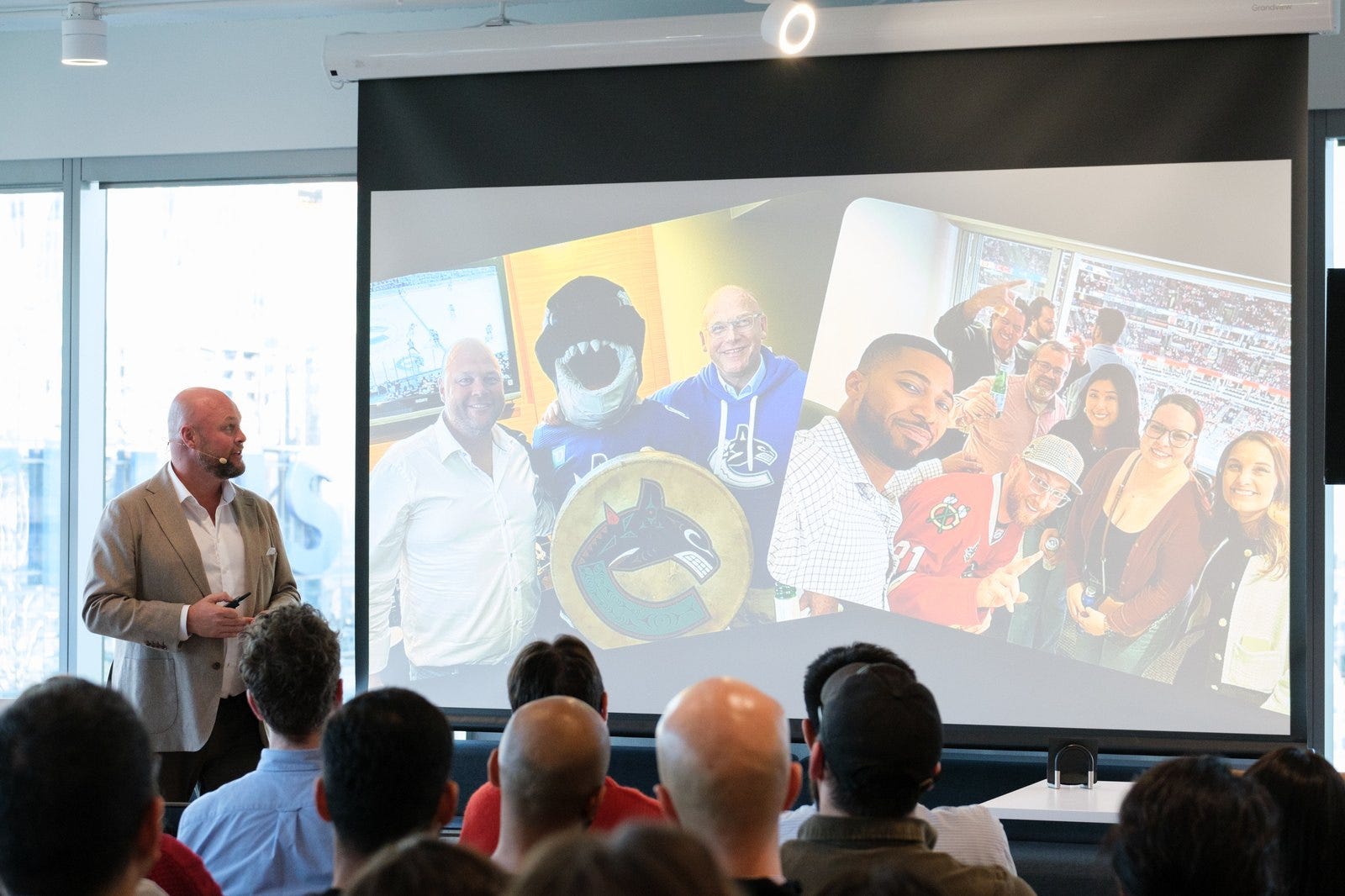
On Monday, June 30, Clio announced a deal to buy vLex for US$1 billion in cash and stock. Harvey had reportedly been among the other bidders. That day, Jack described a perception of “a bit of a velvet rope around some of these legal AI technologies and startups that only the biggest law firms in the world can access.” Carolyn Elefant, the solo lawyer who had praised the wifi at Clio’s first conference, had just written about wanting to use some of that technology, he said, and being “basically told, no, you’re too small for us.” He didn’t name the company.
One of the law firms advising Clio on the deal was Gowling WLG, which had been just Gowlings when Rian ran IT in its Vancouver office.

Skip 8am
The deal still needed approval from Spain, where vLex was legally based, and by early October it hadn’t closed. On October 16, Jack opened ClioCon in Boston, a conference that drew 2,700 people, twelve years after the two pull-up banners in Chicago, and for nearly 90 minutes he showed products built on a library Clio didn’t yet legally own. “For those that thought AI in legal was all hype, or said, ‘I’ll believe it when I’ll see it,’” he said, “well, this is it, you’re seeing it.”
Jack walked the crowd through a day in the life of a fictional lawyer. While she slept, Clio pulled the deadlines out of her court orders and handed the tasks to her paralegal. “Because AI worked overnight,” Jack said, speaking as the lawyer, “I can skip 8am and get my day started at 9.” Two months earlier, the company behind MyCase, one of Clio’s rivals, had renamed itself 8am. Later, she uploaded a 40-page motion and within minutes had a summary of the relevant precedents. Her day ended with the one thing AI couldn’t do for her, an evening run.
Jack’s keynotes usually drew whoops and cheers, and at the 2018 conference someone had told him it was the best day of their life, “with no sense of hyperbole,” he said. Plenty of people in the Boston audience billed by the hour, though, and Clio’s own research had found that up to 74 percent of lawyers’ hourly billable tasks could be automated with AI. For most of the talk, the room was so quiet that Bob Ambrogi, the blogger who had written up Clio in 2008 without trying it, said you could hear a pin drop. Afterward, people told Ambrogi they felt shell-shocked, thrilled, numbed, elated, energized and frightened, and two said they had teared up.
The next day, Jack told the conference that a lot of people had said they were still processing what Clio had announced. “On one hand, I’m sorry,” he said. “But on the other hand, I’m also really excited by that feedback.”
One Saturday night, a week or two before the closing, Hugo Ruiz got on a video call with Clio’s vice president of finance. Ruiz wanted to cut out the advisers and avoid a game of broken telephone, so he showed the Clio executive vLex’s cash flows live, the way he would with his own team. Spain approved the deal in late October, and it closed in the first week of November, 180 days after Jack’s first meeting with Lluís Faus.
On November 10, Clio announced the closing along with US$500 million in new investment that valued the company at US$5 billion. “There’s really three datasets like this on the planet,” Curt Sigfstead, Clio’s chief financial officer, said. “It’s what we have, what Thomson Reuters has, and what LexisNexis has.” Oakley, whose fund made more than six times its money on vLex, took a large part of its payment in Clio shares. Asked about skeptics who doubted that one company could serve everyone from solo practitioners to the largest firms in America, Jack said, “Watch us.” That day, he was due in Barcelona to celebrate with vLex’s leaders.

The Rocking Chair
Inside Clio, the vLex library became Clio Library. In April 2026, Clio announced that Clio Work, the AI workspace Jack had unveiled in Boston, had become the fastest-adopted product in the company’s history, and the company began selling the product on its own to solo lawyers and small firms. “Clio Work really levels the playing field for me,” said a partner at the law firm Williams & Hamilton. In May, Clio’s yearly subscription revenue passed US$500 million.
In September 2026, investors valued Harvey at US$15.5 billion, three times its value the week before Clio signed for vLex. The companies that built the underlying AI models were offering legal tools of their own, and an appeals court still hadn’t ruled in the ROSS case on whether training AI on Westlaw’s headnotes was fair use.
Jack and Rian had once hoped to build a company that brought in a couple hundred thousand dollars a year from a few hundred lawyers. By September 2026, more than 400,000 legal professionals in 130 countries used Clio, and Jack still ran every day.
He joked that he had been moving west across Canada his whole life and would likely retire in Tofino, a surf town at the end of the road on the western edge of Vancouver Island, “just to kind of put a cherry on the journey.”
If the joke held, that was where the rocking chair would be, and where Jack would find out whether vLex had been the best decision of his career or the most expensive mistake. Either way, he wouldn’t be sitting there wondering what would have happened if he hadn’t swung.
Jack’s Not Sorry
From Jack Newton
I’m not sorry for being ambitious.
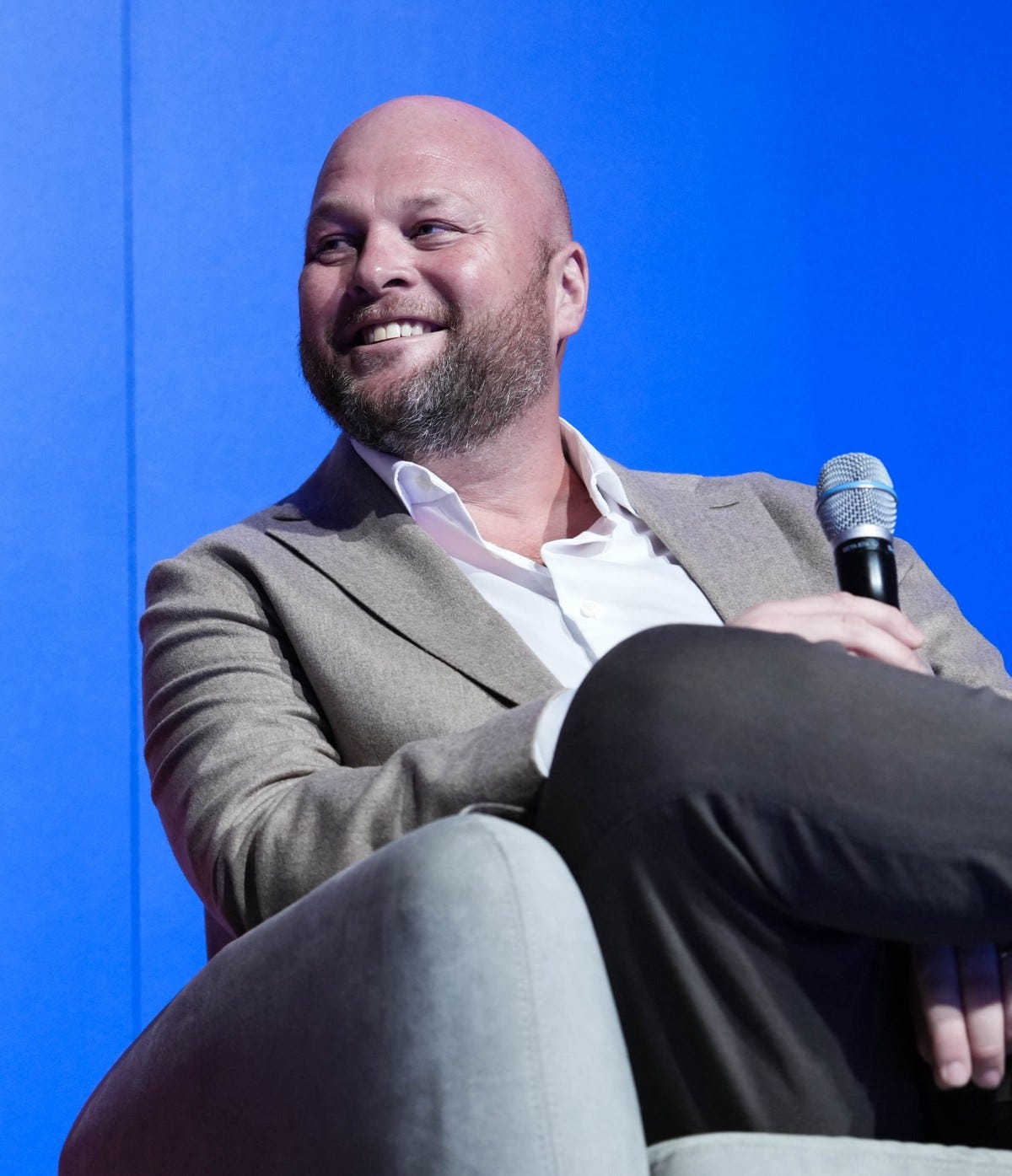
We have way too many founders in Canada who sell too early, for a 10-million or maybe 100-million-dollar outcome, and I think in many cases they’re pressured by investors who want an early or lower-risk return. We don’t have enough people thinking about building big, enduring, generational companies. I want there to be more Shopifys and PointClickCares and Clios and Wealthsimples, and I think we need to celebrate that ambition at a national level. For anyone who’s seen the Heritage Minutes, we should have a flavour of that for great Canadian entrepreneurs. I want more kids leaving school thinking about entrepreneurship as a real calling, when bizarrely it’s almost villainized in some corners of our culture. Company formation is one of the most, if not the most, valuable economic activities we can invest in as a country, and everything from immigration policy to taxation policy should be oriented around encouraging it. We’ve got all the right ingredients. We just need to encourage it, celebrate it and have the right policies at every level of government.
Three winning principles
01
Never be satisfied.
There’s no finish line, there’s no magic number. It’s not 100 million of ARR, 500 million of ARR. It’s a continuing hunger for what’s next.
02
Be a learning machine.
You need to be hungry to learn from mentors or podcasts or reading books. There’s an ocean of information out there, more than there’s ever been. If you’re going to keep up with a parabolic growth curve, you need to be doing everything you can to get better every day.
03
Manage your own psychology.
I talk about myself as often irrationally optimistic, or pathologically optimistic, and you’re going to have some devastatingly hard days. Almost every entrepreneur has faced a day when they were ready to throw in the towel, and I’ve faced a number of those days. You need to keep swimming, and you’re going to get to that next island, catch a breath and get back in the water. Managing your own psychology is probably the most important thing, so that you don’t quit in one of those hard moments.
One thing to take away
A lot of people have an idea they want to give a shot, and they get wrapped up in all the reasons not to do it. Take the plunge and try something new. There are very few things in life that are one-way doors. If you’re young and you don’t have a mortgage or kids, try that high-risk, crazy idea, and if it doesn’t work out, you can always go back to the safe path. There’s asymmetric reward if it works, and often the downside is not as real as people think.
thanks for including my interview with Jack