


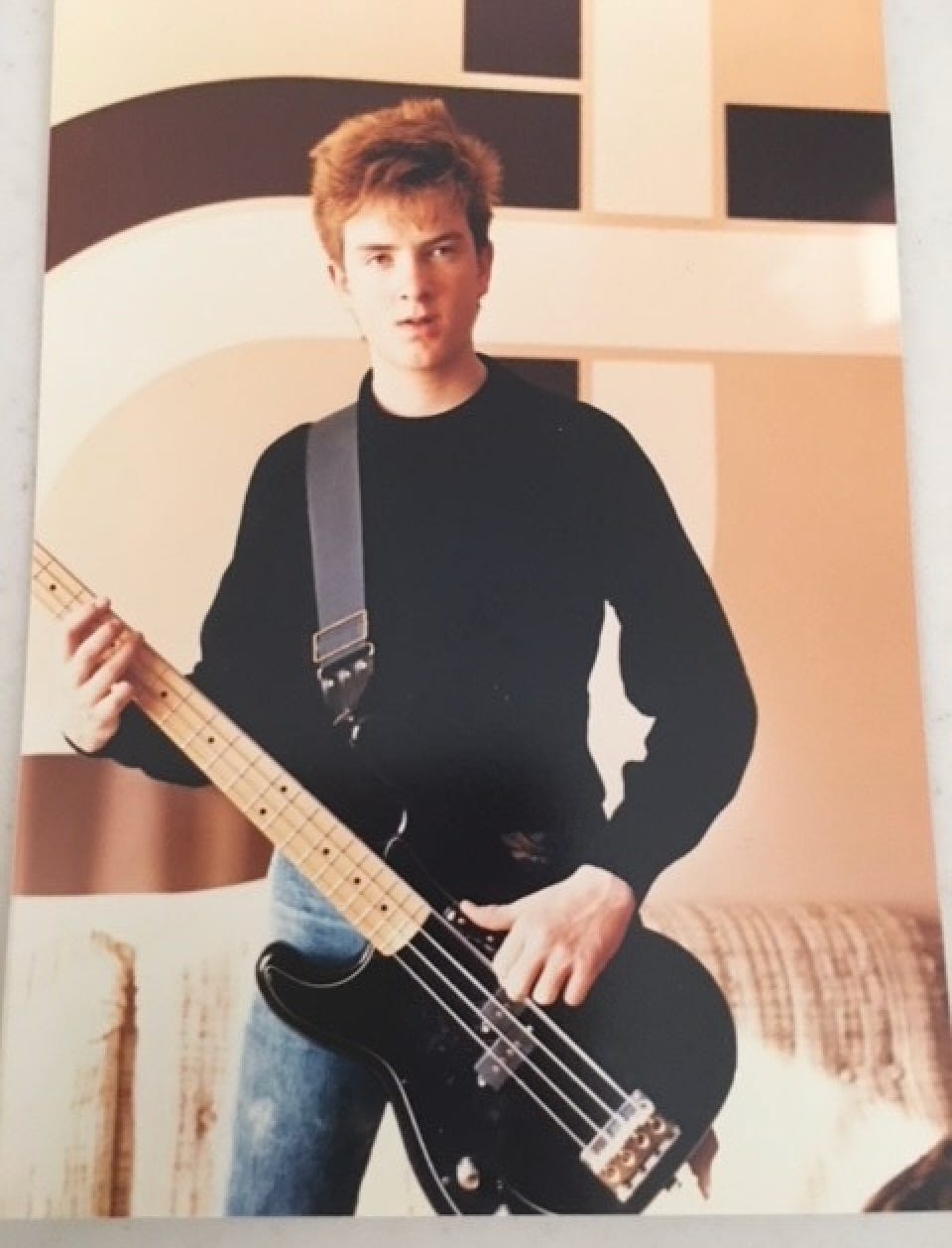
I’m not sorry for building a powerhouse from Canada - Mike Wessinger
A blizzard swallowed Highway 401 whole. Inside a freezing Mississauga office, Mike Wessinger sat alone, twenty-seven and broke, placing his bet on the industry no one his age ever thought about: nursing homes.
He was still staring at the whiteout when the door crashed open behind him.
Dave Wessinger, Mike’s younger brother, stumbled through with snow covering his coat and ice on his toque.
Dave wasn’t supposed to be there. He was supposed to be managing IT for a chain of long-term care facilities. The kind of stable job with a pension plan and benefits package you don’t abandon when you’ve got a newborn at home and a fresh mortgage strangling your bank account.
Without announcing himself, Dave dropped his snow-covered coat and started fixing broken computers, putting his computer science degree to work. For ten minutes, the only sounds were the clicking of keys and a radiator struggling to heat the room. Finally, Dave surveyed the secondhand furniture, the chaos of a one-man operation held together by duct tape and delusion.
“I could see myself working here,” he said.
Mike’s stomach dropped. He’d been hawking software for two years and could hardly afford instant ramen. He grabbed his ledger and ran the numbers twice, praying the math could work.
“I can match your current salary,” Mike said, his mouth forming words his brain screamed were insane. “But if you’re not pulling your weight in six months, I’ll fire you.”
“Done,” Dave replied.
Dave pulled out his phone. Now came the hard part: telling his wife he was torching his stable career for his brother’s longshot software company.
“Hey. You know my brother, Mike?” A pause that stretched. “Yeah, I’m gonna work with him.”
Mike watched his brother’s face shift as, somehow, miraculously, his sister-in-law gave her blessing through the phone.
The brothers shook hands while the storm raged outside.
It was February 12, 1997. PointClickCare was born.
Asphalt, Asbestos, and Ambition
Long before the blizzard of ‘97, the Wessinger household was its own kind of storm. Four brothers arrived within five and a half years, creating what Mike called “proper chaos.” The dynamic was tight and relentlessly competitive, the kind of environment where you learned early that if you wanted something, you needed to move fast and make your case before someone else beat you to it.
While Dave earned the label of “the smart one,” as Mike puts it, Mike became known as the restless kid. His teachers wrote him off as a bad student, though that assessment never quite captured the truth. Mike wasn’t incapable of academic work. He simply couldn’t sit still in a system built for memorization when his brain demanded action and immediate feedback. “I’ve probably got ADHD,” Mike said with a laugh.
At Western University, he treated his education like an experiment in minimum viable effort. “I found it boring,” he told me. “I would go to the minimal number of classes I needed to and study the minimal amount. I scrambled on that...I guess I just wanted to see if I could pull it off.” He did, crossing the stage with his commerce and economics degree. But the real education was happening elsewhere.
Mike spent his university years collecting what he called “every awful job you could ever imagine.” He shoveled cement in a roof tile factory in the summer heat. He cleared asbestos from factory vents.
The job that changed everything was on the factory floor. Mike spent months watching a machine drop metal springs into boxes. The same motion, over and over, eight hours a day. The people around him had been doing this work for decades.
“I was miserable,” Mike recalled. “Standing there watching springs drop into boxes, I thought, I can’t do this for twenty years. I can’t do this for another year.”
The answer arrived during university when Mike stumbled into selling Cutco knives door to door. The work revealed something four years of formal education had failed to uncover. Cutco operated as a pure meritocracy. If you put in the effort, you saw the results.
“I realized I felt like an entrepreneur because you got the returns for the effort you put in,” Mike explained. “I realized I had the power of persuasion...There’s some real glory in sales.”
By the time Mike graduated from Western, he had developed three crucial insights about himself. First, he was a practical learner who needed immersion rather than theory. Second, he had a genuine talent for persuasion. Third, he would do whatever it took to avoid watching another spring drop into a box.
What he didn’t have was a clear map forward. To find his actual path, Mike had to move back home and get on the train.
The GO Train MBA

Mike graduated from Western and moved back into his parents’ house in Oakville. He was in his early twenties, broke, and working a full-commission sales job that paid him only when he closed deals. Every morning for a year, he joined the stream of commuters heading toward the 7:45 a.m. train to Union Station. His father sat beside him.
To the outside world, Mike’s dad was a government economist who handled international marketing for Ontario, moving sewage treatment plants and highway projects around the globe. Born in Nazi Germany in 1942, he had arrived in Canada at thirteen, learned a new language, and entered government service in an era when smart people with economics degrees saw public sector work as a legitimate way to change the world. To Mike, he was the first person who showed him how to actually think.
Mike was hitting walls everywhere in his early sales jobs. He would land meetings that seemed promising; lose deals he thought were certain, struggle with prospects who said one thing and did another. On the forty-five-minute Go Train ride into Toronto, he would dump these frustrations on his father.
This pattern repeated for a year. Mike would describe a problem, his father would see the underlying structure, and Mike would go back armed with insight that turned a stalled deal into a signed contract. “I would give him a couple of random pieces of the puzzle, not even a corner piece,” Mike told me. “And he would paint me the whole picture. He’d say, ‘Oh, here’s what’s happening. There’s this beautiful landscape and there’s mountains in the back.’ I’m like, how did you get all that?”
“I feel like I got the full MBA, riding on the GO train from Oakville to Toronto my first year out of school,” Mike said. The education was faster and more practical than anything he could have gotten in a classroom. His father was teaching him pattern recognition: the ability to see the mountain in the fog, to understand what was actually happening beneath the surface of what people said and did.
Each morning, by the time the train pulled into Union Station, Mike was less salesman and more strategist. The hustle from the factories, the persuasion from Cutco, the pattern recognition from his father: the pieces were coming together. Mike could see opportunities others missed.
He just needed a market where the patterns were completely broken. As it turned out, he didn’t have to look far. His mother, a CPA who worked for a chain that owned and managed distressed LTC facilities, was already standing in the middle of the perfect mess. Through her contacts, all four Wessinger boys had found themselves working in and around the same overlooked industry.
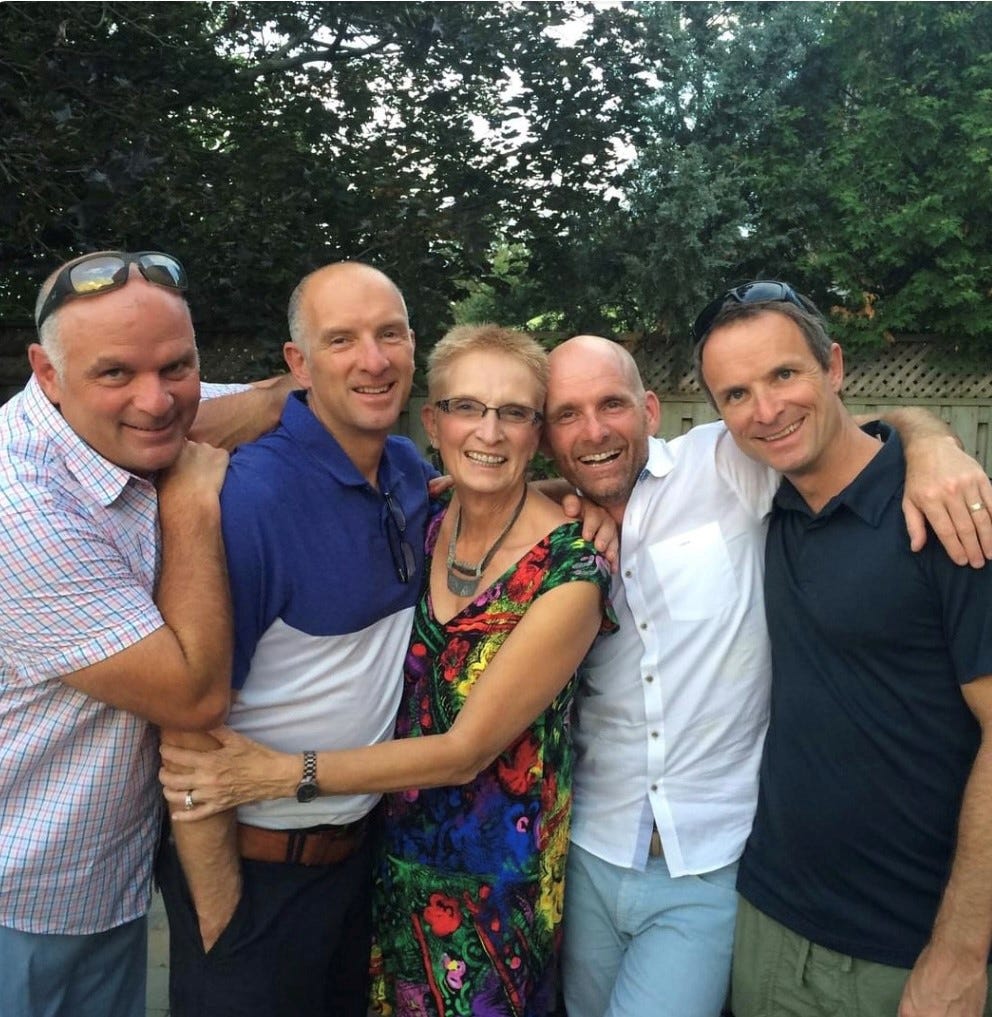
Mike just didn’t know yet that this obscure, low-margin world would become his mountain.
The ‘I’ to Get the ‘R’

Mike didn’t wake up one morning with a burning desire to revolutionize geriatric care. In the early 90s, nursing homes were the last place a self-proclaimed “adrenaline junkie” in his twenties would look for a career.
“I didn’t pick the industry,” Mike told me. “It just happened to be where my mother had contacts.”
Mike spent months walking through fluorescent-lit hallways and cramped administrative offices, developing a feel for the operators who ran these places. Some facilities were faith-based organizations. Others were family businesses, often the largest employer in town, operated by owners who had inherited both the mission and the razor-thin margins.
Mike saw the same scene play out over and over. An administrator would show him a quote for a new billing system and the number at the bottom was around a hundred thousand dollars.
“We clear about two percent on a good year,” one administrator told him. “I’d have to write this check and pray it pays off in three years, maybe four. But I don’t have an IT guy to maintain it. I don’t have the staff to learn it. So I’m not going to do it.”
The administrator wasn’t stupid or resistant to change. He was simply trapped by math that didn’t work.
Mike saw the same pattern everywhere: one to two percent margins, hundred-thousand-dollar server quotes, no IT staff. Most operators walked away.
“They didn’t have the ‘I’ to get the ‘R’ on their ROI,” Mike said.
As Mike spent more time in these facilities, the operators began changing his perspective on what constituted an opportunity.
“Just because you’re passionate about it, there’s ten people who want to do every job, so they can underpay you and overwork you,” he explained. “But you go to somewhere where it’s a little less sexy and it doesn’t attract the hordes to get into it; there can be a great business in there.”
Mike’s initial indifference was giving way to conviction.
“I got a passion for it,” he told me. “These are great people. We can help them.”
Mike had found his mountain, hidden in plain sight while everyone else chased glory in sexier markets. He just needed someone willing to climb it with him.
On February 12, 1997, during a blizzard that shut down Highway 401, that person walked through the door.
Betting on the Jockeys

Mike tried to raise venture capital (VC) in 2001. The meetings did not go well.
The pitch was straightforward: PointClickCare would host nursing home software on centralized servers, deliver it over the internet, and charge customers a monthly subscription. No upfront license fees, no expensive hardware installations, no IT staff required.
“Let me get this straight,” Mike recalls one investor saying. “You’re gonna put healthcare records on the internet and customers are gonna pay you forever? Don’t let the door hit you in the ass on the way out.”
The VCs had just survived the dot-com crash. PointClickCare was asking them to believe in a business model that did not exist yet, serving a market nobody cared about. Mike and Dave needed to find money somewhere else.
“We’ve got to find people who are going to blindly bet on the jockeys,” Mike said.
The jockeys were Mike and Dave. The people willing to bet on them went by the names of aunt and uncle and friend and coach. People who’d known Mike since he was fourteen, otherwise known as his Billy Idol era.
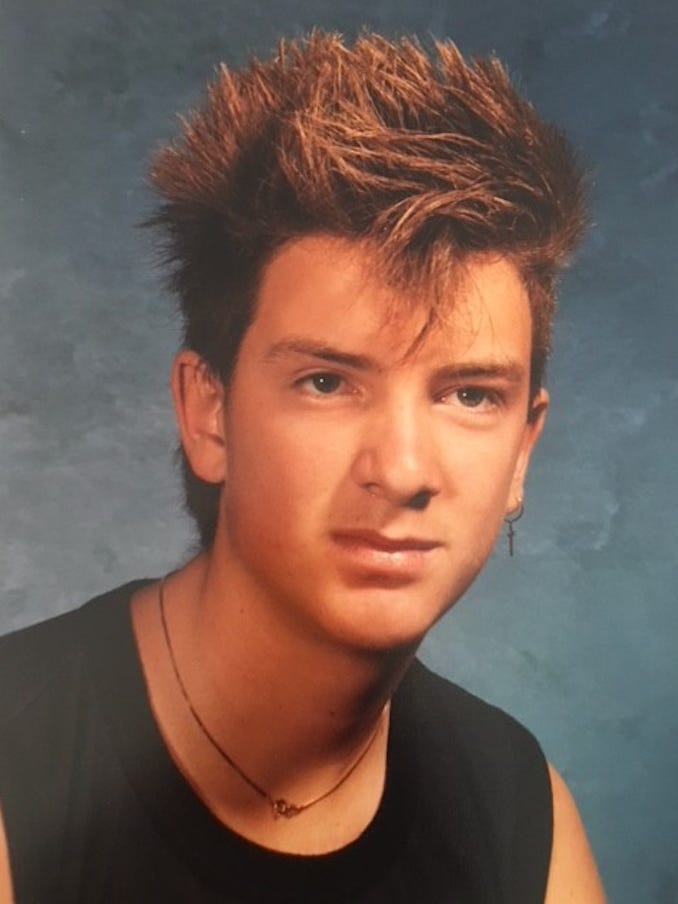
“For some of them, it was their life savings,” Mike recalled. “This is money you can’t afford to lose. I better get it right.”
Between 2001 and 2002, PointClickCare raised roughly $600,000 CAD in friends and family money. More importantly, it came from people who were not betting on the business model. They were betting that Mike and Dave would figure it out.
What they were building did not have a name yet. “Salesforce was not a household name,” Mike said. “Nobody could spell SaaS. No one’s talking about the cloud. We’re just trying to solve for a market problem.”
Mike eliminated the last barrier by refusing to ask for multi-year contracts. “If you don’t like us in 30 days, kick us out.” It was a game changer. Administrators who had been paralyzed by risk suddenly had nothing to lose. Deals that would have stalled for months closed in weeks.
Years later, Mike would coach other founders stuck in the same trap. “You’re an unknown commodity with a disruptive model, and you’re asking them to commit to three years,” he’d tell them. “You’ll never get customers if you’re asking them to take all the risk.”
When founders shifted to shorter terms, deals closed.
The thirty-day model became a forceful function. To this day, PointClickCare largely operates on month-to-month contracts while competitors lock customers into multi-year agreements. “We were forced to do it because they could have left us at any time,” Mike said.
For the next four years, PointClickCare reinvested every dollar and stayed profitable.
By 2005, they were profitable, growing, and building a reputation with small and mid-sized chains.
Then one of the largest nursing home chains in America started calling.
Crossing the Chasm

The true test of a platform is how it holds up when a giant steps onto the scale.
In 2005, Mike’s phone rang. On the other end was one of the largest nursing home chains in the United States: over four hundred homes across thirty-six states. PointClickCare had fifty people.
“We knew this would be high-profile, either in a good way or a bad way,” Mike told me. “If it blew up, everybody would know it.”
Rather than try to oversell them, Mike did the opposite. He told them exactly why they shouldn’t hire him.
“We are not ready for you yet. We are ready for thirty-home chains, not four hundred-home chains. If you expect this to work out of the box, you’ll blow our brains out.”
Honesty worked. The chain had dealt with enough vendors who promised the world and delivered nothing. They agreed to work with PointClickCare as an early adopter.
Shortly after, a second major chain sent PointClickCare a three hundred page Request for Proposal (RFP). Mike read through the document and realized it was written to favour one of their competitors. The project was literally named after the competitor.
Mike declined to respond.
Eight months later, the chain called back, upset that PointClickCare had ignored their request. A dozen other vendors had responded, but none could deliver what the chain needed.
Would PointClickCare respond to a smaller RFP? No. Would they at least come to do a demo? That, Mike agreed to do.
Mike laid out the same terms. Both organizations would coordinate their priorities, because if they pulled PointClickCare in conflicting directions, they would rip the company apart.
“You’re the only ones who said no to the RFP,” the executives told him. “You’re the only ones who were being straight with us.”
Both chains signed.
Suddenly, Mike and Dave were caught between two titans. PointClickCare doubled its headcount over eight months, hiring so fast it couldn’t even onboard people properly.
“It took us to our knees,” Mike recalled. “Every Monday morning, people were standing at the door. I’d ask, ‘Who’s your boss?’ They’d say, ‘Andy.’ I’d tell them, ‘He’s not here yet. Find a computer in a box over there, find a desk, and get set up.’”
What almost broke them wasn’t one crisis, but the cash constrained nature of an early subscription business. The chains paid as they brought facilities online, which meant revenue trickled in while expenses exploded. They were funding the growth of two giants on a month-to-month budget.
Mike went to one of the Chief Information Officers (CIOs) with a proposal.
“If you pay me for two years in advance, I will put one hundred percent towards R&D.”
It was an ask that required trust PointClickCare hadn’t yet fully earned. But PointClickCare had built enough trust through eight years of brutal honesty and desperately needed cash.
The CIO came back with approval.
It was a make-or-break moment. If they failed, the cloud experiment would be dead. If they succeeded, they would become the default winner in the market.
PointClickCare executed. The two chains went live, facility by facility, state by state. The software worked.
The other top ten nursing home chains had been watching the entire time, calling the early adopters and asking how it was going, banking on PointClickCare failing spectacularly. The answer kept coming back the same: the software was working; the early adopters were happy.
The market flipped. Nobody had wanted to be first to take the risk on a small Canadian vendor with an unconventional model, but nobody wanted to be last either. The remaining large chains started calling.
PointClickCare had crossed the chasm, meaning it had gone from having to prove itself to every customer to customers assuming it was the best choice.
Crawling Through a Ditch With a Knife

PointClickCare had crossed the chasm with the large chains, but Mike quickly realized he had not entered one American market. He had entered fifty.
Healthcare in the U.S. is regulated state by state, each with its own billing requirements, licensing rules, and compliance frameworks. In the early days, PointClickCare tried to take customers wherever they could find them. A facility in Nevada. One in Rhode Island. Another in Pennsylvania, then Ohio, then Minnesota.
The approach was exhausting.
“We were trying to localize and create products for every state simultaneously,” Mike said. “We almost ran out of money. We can’t fight on all these fronts.”
Mike and Dave made a decision that would define their expansion strategy for the next five years. They would stop chasing opportunities across the country and start building market density one state at a time.
“I call it crawling through a ditch with a knife in your teeth,” Mike told me. “Every new market was as hard as hard gets. You had to put everything you had in order to get that first ten percent market share.”
The strategy was methodical. PointClickCare would enter a state and build relationships with every accounting firm that worked with nursing homes, find the high-profile consultants, show up at state trade shows, and learn who held influence. Getting the product right for each state’s regulatory requirements was only half the battle. The real advantage came from building density. Staff in nursing homes hopped between facilities constantly, and a nurse who loved PointClickCare at one home became Mike’s best salesperson when she moved to the facility across the street.
The grind was identical in every state.
“From ten to twenty-five percent market share, we were in the mix,” Mike said. “We always got invited. Before that, you had to beg just to get them to listen to you.”
After twenty-five percent, PointClickCare became the default consideration. After fifty percent, the game was over.
“Once we hit fifty percent market share in a state, we were taking orders,” Mike said. “How many beds? When do you want to start?”
Mike developed a philosophy about market selection that ran counter to everything venture capitalists wanted to hear.
“VCs want to hear about this huge TAM,” (total addressable market) Mike said. “I don’t care about your ten-billion-dollar TAM. I care about your fifty-million-dollar target market.”
The distinction mattered. A massive total addressable market meant nothing if you could not dominate a specific geography with enough density to create momentum.
By 2009, PointClickCare was a massive success by any Canadian standard. It was profitable, growing forty percent a year. It had built a world-class business entirely on its own terms, without venture capital, without sacrificing control, without doing unnatural things to hit arbitrary growth targets.
Then Mike hired a Chief Financial Officer (CFO), and the questions started changing.
Lifestyle or Powerhouse

In late 2009, Mike hired his first “real” CFO. PointClickCare had people handling the books before, but they were accountants and bookkeepers. This was different. The new CFO had run finance for companies at PointClickCare’s scale and brought a vocabulary that was somewhat foreign to Mike.
A few weeks into the job, the CFO sat down with Mike and said something that sounded important.
“Your capital is constraining the business.”
Mike stared at him. “I don’t know what that even means.”
The CFO tried to explain, but the concept did not land. Mike had spent his entire career avoiding the venture capital fundraising cycle. He had watched too many entrepreneurs introduce themselves by their funding round rather than what their company actually did.
“Every entrepreneur I’d meet would be like, ‘Oh yeah, we’re a Series A company,’” Mike said. “I’m like, that tells me nothing. Where do you add value to the world? I never got caught up in that fundraising cycle.”
But the CFO’s comment stuck with Mike. Around the same time, a venture capitalist showed Mike a model about how raising money could allow him to take some chips off the table while accelerating growth. The idea of de-risking personally while growing the company faster sounded interesting in a way Mike had not considered.
Then Mike attended a conference that an investor had organized. Frank Slootman, then CEO of ServiceNow, was speaking to a room full of SaaS CEOs. He asked a simple question.
“How many of you are growing your SaaS business to break even?”
Mike’s hand went up fast, along with a couple other CEOs. Growing profitably while bootstrapped? Damn right!
Slootman’s face said it all.
“You’ve got a company that’s growing thirty to forty percent a year, your gross margins are over eighty percent, you’ve probably got one hundred and ten percent retention rates, and you could grow faster. You choose not to, because you’re worried about an artificial line called profitability. You’re being irresponsible.”
Mike sat there processing what he had just heard.
“I went, ‘No, I’m not being irresponsible.’ I thought I was being responsible. But the reality is, I could have grown faster, and I chose not to, because I didn’t want to raise capital.”
And then it clicked. That was what the CFO had been trying to tell him. They were capital constraining the business.
Mike went back to Mississauga and started thinking about how PointClickCare actually made decisions. The annual budget cycle always started the same way. Mike would look at his brother Dave and ask what he wanted for the next year. Dave would say he wanted a cottage and a wake boat. Mike would say he wanted the same things. They would figure out what those cost, determine the revenue they needed to generate, and build the budget from there.
“That’s the definition of building a lifestyle company,” Mike realized. “I looked at him and I go, ‘Do we want to build a lifestyle company, or do we want to build a powerhouse?”
They were still relatively young. They had poured their hearts into PointClickCare for over a decade. They had proven the model worked, proven they could compete, and proven they could win. The question was whether they wanted to find out what the company was really capable of.
“Let’s see what this guy is really made of,” Mike said. “Let’s go raise money and see if we can build a powerhouse.”
In 2011, PointClickCare ran a formal fundraising process. Fifty interested parties. Twenty management presentations. Thirteen term sheets.
They raised fifty million dollars. Half went to the company. The other half went to the founders and early shareholders that took a risk on Mike and Dave.
“If it doesn’t work out, we can still be drinking Bordeaux,” Mike said.
The decision to raise capital was not about needing money to survive. PointClickCare was profitable and growing. It was about making a conscious choice between two different versions of success.
To lifestyle, or to powerhouse, that was the question.
Mike and Dave chose the powerhouse.
The Silver Tsunami

PointClickCare now generates almost one billion dollars in annual revenue and employs over two thousand people, with Dave running operations as CEO and Mike serving as Executive Chair of the Board of Directors.
The scrappy team of fifty that could have broken while crossing the chasm has become a critical part of North American long-term care. PointClickCare’s care collaboration network connects over thirty thousand long-term care providers and three thousand hospitals across the continent, ensuring that when a senior moves from hospital to nursing home to home care, their medical data moves with them.
The moment Mike and Dave have been building toward has arrived.
The first Baby Boomers turn eighty this year. Facilities face a crisis that makes everything that came before look manageable. The cost to deliver care has climbed to one hundred thirty thousand dollars per resident per year, while government and insurance reimbursements cover seventy-five thousand. The math that trapped administrators decades ago has gotten worse, not better.
There are not enough nurses even if facilities could afford them. The gap between what care costs and what society is willing to pay keeps widening.
PointClickCare has shifted from record-keeping to outcome-optimization, using predictive analytics and artificial intelligence to help chronically short-staffed facilities triage patients before crises occur. The platform can identify a resident at risk of falling three days before it happens, flag a urinary tract infection before it becomes sepsis, predict which patients will be readmitted to the hospital within thirty days. The industry cannot solve this by hiring more people because there are no more people to hire. Technology has to fill the gap.
Mike spends much of his time now as co-chair of C100, helping build the next generation of Canadian tech companies. When he talks to young founders, he tells them the same thing his father taught him on the GO train: pick the market where you can see patterns others miss, build density before anyone else understands why it matters, and be willing to crawl through ditches while everyone else chases glory somewhere easier.
On February 12, 1997, Mike Wessinger shook hands with his brother in a freezing Mississauga office during a blizzard that shut down Highway 401. He was in his late twenties, broke, and betting everything on an industry nobody his age thought about. He had no venture capital, no clear business model, and no idea that the company name they picked that day would still be on the platform serving millions of people three decades later.
The silver tsunami has arrived.
PointClickCare is ready to meet the wave.
Mike’s Not Sorry
Written by Mike Wessinger
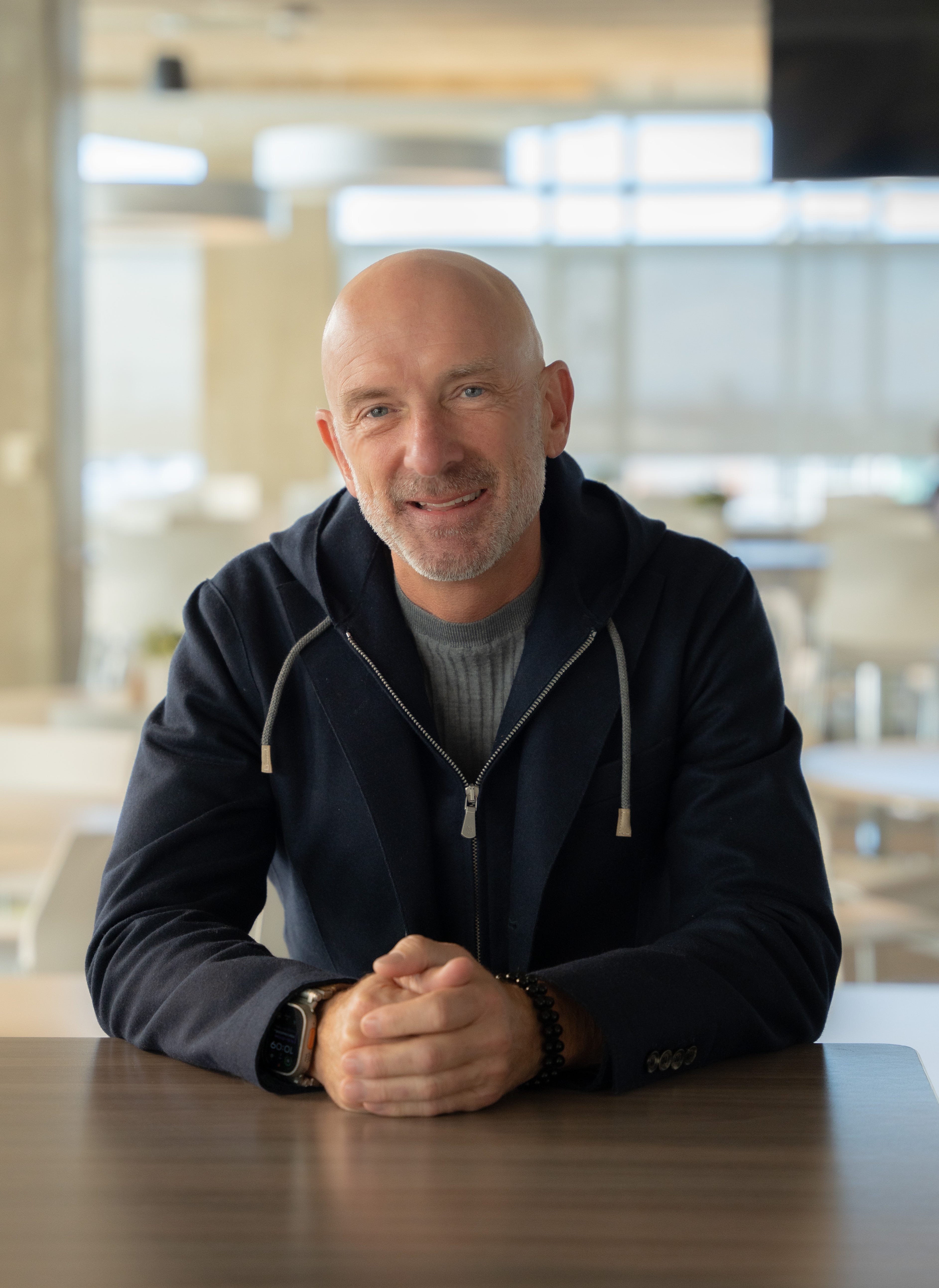
I’m not sorry for building a powerhouse from Canada.
Three winning principles:
Lifestyle vs category killer is a decision. Nothing is wrong with either but your actions will be very different depending on what you choose. Know it’s a choice.
Don’t over index in fundraising. Over index on your customer and customer delight. Make sure you know where you add value to the world and be the best at it!
Develop a strong support network. This can include investors, team members and leaders of similar companies that are 4-16 quarters ahead of you.
One thing to takeaway:
We built a billion-dollar company from Mississauga. So can you.
That’s all for today. Let’s go build powerhouses!
To winning,
Bryan
Subscribe for free essays and reported stories on business, ambition and Canada’s future.
Amazing read! Loved the VC angle - Treating external capital as fuel to drive firm mission rather than becoming the mission itself.
Awesome story. Incredible. Love it. The tenacity, the grit, the determination. Built a powerhouse from Missisauga. Kudos Mike and thanks for sharing this profile, what a great piece.